Isodynamic Training in 2026: How Isometric and Dynamic Workouts Boost Strength and Flexibility

Most workouts miss one side of strength. They either build control without enough movement, or movement without enough control. Isodynamic training closes that gap.
It blends isometric holds with dynamic repetitions in the same workout, exercise, or phase of a rep. The result is simple. You learn to produce force, hold position, move well, and stay strong through real ranges of motion.

What is isometric training?
Isometric training means creating muscle tension without visible joint movement.
The body holds a position. The muscle works hard, but the limb does not travel through a range of motion.
Common examples include:
Wall sits
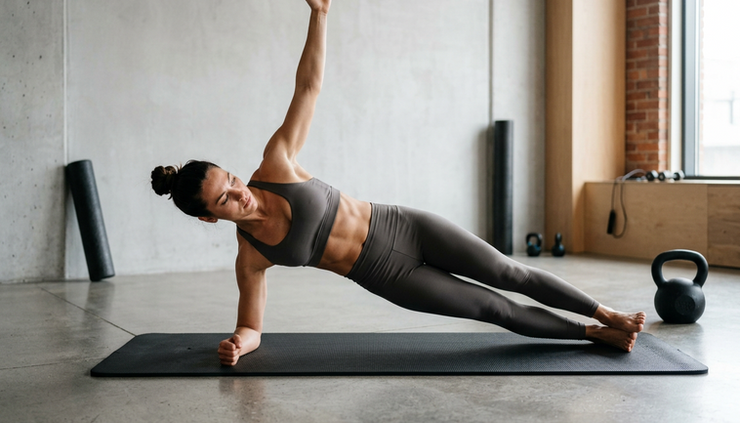
Planks
Dead hangs
Pause squats
Glute bridge holds
Split squat holds
Mid-thigh pull holds
Isometric push-up holds
During a wall sit, the knees stay bent. The quads still work. During a plank, the spine should stay steady. The abs, glutes, shoulders, and thighs all create tension to resist movement.
Isometric training is not “easy” because it is still. A 30-second hold at the right intensity can be brutal.
It builds strength at specific joint angles. That matters. A pause near the bottom of a squat can improve control where many lifters lose position. A hold at the top of a pull-up can improve scapular strength and grip. A plank can teach the trunk to resist extension before loading heavier lifts.
Research has been kind to isometrics in recent years. A 2023 network meta-analysis in the British Journal of Sports Medicine found that isometric exercise was strongly associated with blood pressure reduction compared with several other exercise modes. That does not make isometrics a medical treatment on their own. It does show that sustained muscle tension can create meaningful cardiovascular effects.
For training, the big value is clear. Isometric work improves:
Position control
Joint stability
Tendon tolerance
Bracing skill
Strength at targeted angles
Mind-muscle connection
That last point matters more than it sounds. Holding a position gives the brain time to find the right muscles. Many people move too fast to notice what is actually working.
What is dynamic training?
Dynamic training means the joints move while the muscles produce force.
Most traditional strength and fitness exercises are dynamic. The body moves through a range of motion. Muscles shorten, lengthen, or do both.
Examples include:
Squats
Lunges
Push-ups
Pull-ups
Rows
Deadlifts
Kettlebell swings
Step-ups
Medicine ball throws
Running and cycling
Dynamic training includes two key muscle actions.
Concentric action happens when a muscle shortens while producing force. Standing up from a squat is concentric work for the quads and glutes.
Eccentric action happens when a muscle lengthens under tension. Lowering into a squat is eccentric work. So is lowering a dumbbell during a curl.
Dynamic exercise builds strength across motion. It also supports coordination, power, balance, and conditioning. This is why most sports and daily activities depend on it. Climbing stairs, lifting a suitcase, sprinting, jumping, and getting off the floor all require moving strength.
Dynamic training also plays a role in flexibility. A 2021 systematic review and meta-analysis in Sports Medicine reported that strength training can improve range of motion, with effects that can be comparable to stretching in some contexts. That finding changed how many coaches discuss mobility. Loaded movement through good range can build flexibility and strength at the same time.
The key is control. Fast, sloppy reps do not deliver the same benefits as purposeful movement.
How isometric and dynamic work combine in isodynamic training
Isodynamic training uses both methods on purpose. It does not mean adding a random plank at the end of a workout. It means pairing stillness and motion so each one improves the other.
There are three common ways to do it.
Add pauses inside dynamic reps
This is the easiest entry point.
Take a normal lift. Add a hold at the hardest or weakest point.
Examples:
Squat down, pause for 3 seconds, stand up
Lower into a push-up, hold 2 seconds above the floor, press up
Hold the top of a hip thrust, then lower under control
Pause at the bottom of a Romanian deadlift, then stand tall
Hold the top of a row, then lower slowly
The pause removes bounce and momentum. It forces control. It also exposes weak positions fast.
A paused squat is not just a squat with a delay. It teaches bracing, hip position, foot pressure, and patience under load.
Pair a hold with regular reps
This method uses a hold before, during, or after a set.
Examples:
20-second wall sit, then 10 bodyweight squats
15-second dead hang, then 5 controlled pull-ups
30-second glute bridge hold, then 12 hip thrusts
10-second lunge hold on each side, then 8 reverse lunges
20-second hollow hold, then 10 slow dead bugs
The hold wakes up the target muscles. The reps then train those muscles in motion.
This works well for warm-ups, rehab-style strength work, and skill practice. It also helps people who struggle to “feel” the right muscles during fast reps.
Use overcoming or yielding isometrics
These are more advanced.
A yielding isometric means holding a position against gravity or a load. A wall sit is yielding. So is holding the bottom of a split squat.
An overcoming isometric means pushing or pulling against something that does not move. Think of pressing against safety pins in a squat rack, pulling against an immovable strap, or pushing hands into a wall.
Overcoming isometrics can create very high force. They should be used with care. They fit better for trained lifters, athletes, or supervised sessions.

Why isodynamic training matters in 2026
Fitness in 2026 is more practical than flashy. People want strength that carries over. They want mobility without endless stretching. They want workouts that protect joints and still feel athletic.
Isodynamic training fits that demand.
It helps bridge the gap between gym strength and usable movement. A heavy lift matters. So does the ability to stop, hold, adjust, and move again.
That is real fitness.
It builds strength where people are weakest
Most lifters have sticking points. A squat gets hard near the bottom. A push-up breaks near the floor. A pull-up fails near the top. A deadlift slows just below the knees.
Isometric holds target those points directly.
This follows a basic training principle called specificity. The body adapts to the positions and demands it practices. If a person holds the bottom of a split squat with good alignment, that position becomes less threatening and more stable over time.
Dynamic reps then connect that new control to full movement.
This is why paused reps have stayed popular in strength sports. Powerlifters use them to reduce bounce. Weightlifters use them to improve positions. Physical therapists use similar ideas to rebuild tolerance and control.
It supports flexibility without losing strength
Traditional flexibility work often separates stretching from strength. That can help, but it is not the only path.
Isodynamic training builds mobility under tension. That means the body gains range while learning to use that range.
For example, a slow goblet squat with a 5-second bottom hold trains the hips, knees, ankles, trunk, and upper back. It also teaches the nervous system that the bottom position is safe and controllable.
The goal is not forcing depth. The goal is earning depth.
Strong range of motion is useful range of motion.
Good isodynamic mobility drills include:
Cossack squat holds with controlled side-to-side reps
Deep squat holds followed by slow squats
Split squat holds followed by full lunges
Jefferson curl variations with very light load and strict control
End-range calf raise holds followed by full calf raises
Loaded mobility needs respect. Start light. Own the position. No bouncing into pain.
It improves joint control and tendon tolerance
Tendons respond well to progressive loading. Isometric work is often used in rehab and performance settings because it can load tissue while limiting joint motion.
That does not mean every tendon issue needs isometrics. Pain needs a qualified assessment. But as a training tool, holds can help athletes and recreational lifters build tolerance in controlled positions.
Dynamic work then restores rhythm and coordination.
This pairing matters for areas that often get irritated:
Knees
Achilles tendons
Shoulders
Elbows
Hips
Lower back
A smart program does not chase fatigue at all costs. It uses the right dose. A 20-second Spanish squat hold followed by slow step-downs, for example, can train knee control without turning the session into punishment.
It improves fitness without wasting time
Isodynamic sessions can be dense. A set that combines a hold and reps creates strength, muscular endurance, and coordination in one block.
Try this lower-body example:
Exercise | Isometric piece | Dynamic piece |
Goblet squat | 5-second bottom hold | 6 reps |
Split squat | 10-second bottom hold each side | 8 reps each side |
Calf raise | 10-second top hold | 12 reps |
Side plank | 20-second hold | 8 hip dips each side |
That is not complicated. It is focused.
This approach also works for people who train at home. Dumbbells, bands, bodyweight, a pull-up bar, and a sturdy bench are enough for many sessions.

What coaches and research say about the method
The American College of Sports Medicine recommends that adults perform muscle-strengthening activities for all major muscle groups at least two days per week. It also supports flexibility and neuromotor training as part of a complete fitness plan.
Isodynamic training fits inside that wider model. It trains strength. It challenges balance. It can improve range of motion. It also teaches control.
Strength coaches often use the same principle even when they do not call it isodynamic training. Paused squats, tempo presses, loaded carries, wall sits, and hold-then-rep sequences all combine static and moving strength.
The practical consensus is clear. Build control first, then express that control through movement.
Recent research also supports pieces of the model.
Isometric training has shown value for strength at specific joint angles and may support cardiovascular health markers. Dynamic resistance training has strong evidence for improving muscular strength, power, function, and body composition when paired with sound nutrition and recovery. Strength training through full range can also improve flexibility.
The blend is the point. Isometrics teach the body to own positions. Dynamic work teaches the body to move through them.
That is why the method has gained attention in 2026. It matches how people want to train now. Less random exercise. More intent. More quality per rep.
How to build an isodynamic workout
Start with simple rules.
Use holds where form matters most. Add movement only when the hold looks solid. Keep the load moderate at first. Stop before technique breaks.
A good session can follow this structure:
Warm up with low-intensity holds
Use planks, glute bridge holds, dead hangs, wall sits, or split squat holds. Keep effort around 5 to 6 out of 10.
Train one main lift with pauses
Pick a squat, press, hinge, pull, or lunge. Add a 2 to 5 second pause.
Use hold-then-rep accessory work
Pair a short isometric with 6 to 12 controlled reps.
Finish with mobility under control
Use deep squat breathing, Cossack holds, active hamstring work, or calf holds.
Here is a sample full-body session.
Block | Exercise | Sets |
Warm-up | Glute bridge hold, dead bug, dead hang | 2 rounds |
Strength | Paused goblet squat | 4 sets of 6 |
Push | Push-up hold near bottom, then push-ups | 3 sets |
Pull | Top-position row hold, then rows | 3 sets |
Legs | Split squat hold, then reverse lunges | 3 sets each side |
Core | Side plank hold, then controlled rotations | 2 sets each side |
Rest long enough to keep reps clean. For strength work, that may mean 90 seconds to 3 minutes. For lighter accessory work, 45 to 90 seconds may be enough.
Common mistakes to avoid
The method is simple, but people still overdo it.
Avoid these mistakes:
Holding your breath through every isometric
Turning every set into a max effort
Using long holds with poor posture
Adding pauses to loads that are already too heavy
Chasing soreness instead of control
Forcing range of motion before the body is ready
Breathing matters. During hard holds, brace without panic. Short, controlled breaths work better than going rigid everywhere.
Pain is also not the goal. Muscle effort is fine. Joint pain, sharp pain, numbness, or symptoms that worsen over time need attention.
This article is for general fitness education. It does not replace medical care, physical therapy, or coaching for a specific injury.
The takeaway for better training in 2026
Isometric training builds tension and control. Dynamic training builds movement, coordination, and strength through range. Isodynamic training brings them together.
Use it when a lift feels unstable. Use it when mobility does not carry over to exercise. Use it when workouts feel rushed and sloppy. Start with short holds, clean reps, and moderate loads.
A strong body should do more than move weight. It should control positions, produce force, absorb force, and move well. Isodynamic training trains all of that in one clear system.


Comments